Meet Our Goats
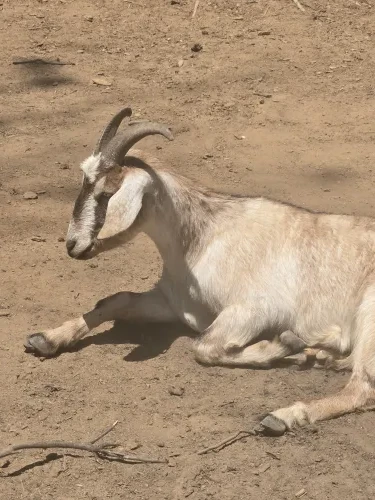
Bambi
The Farm’s Official Ambassador
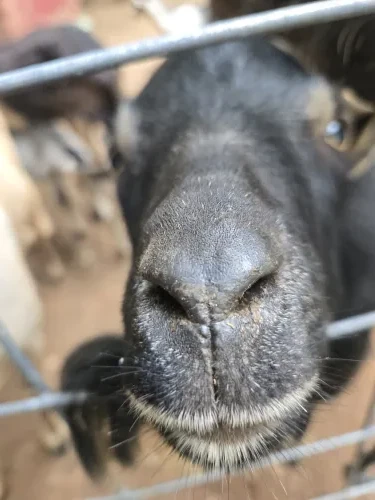
Honey Bear
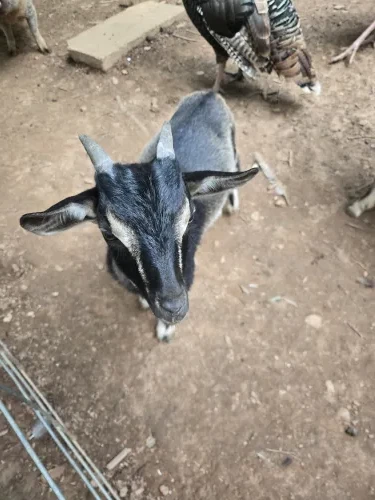
Pepper
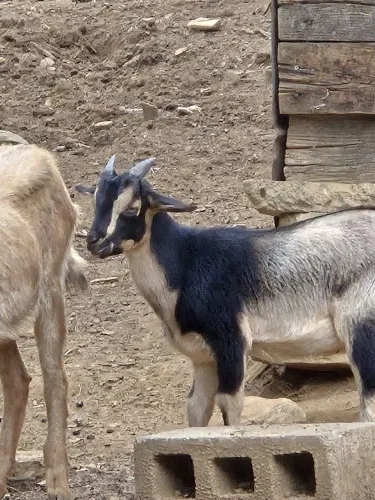
Ruby
The Spirited Explorer
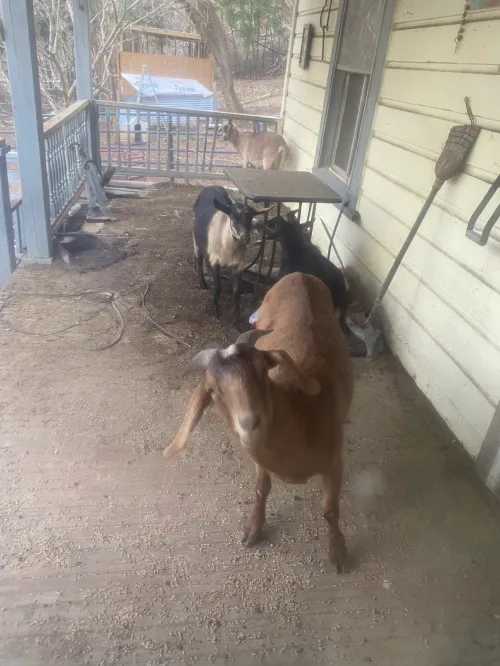
Scarlett
The Resolute Matriarch
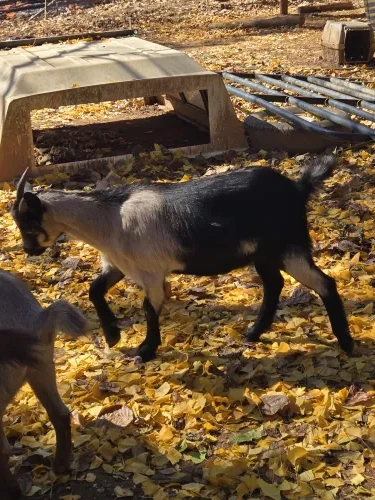
Thunder
The Storm-Born Spirit
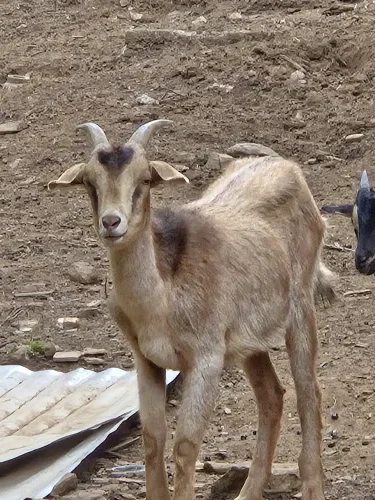
Vanilla
The Graceful Matriarch of the Herd
The Trailblazing Goat: A History of Our Oldest Livestock
If the donkey is the world's most enduring pack animal, the goat (Capra hircus) is arguably its most versatile survivor. Among the first species to be domesticated by humans, goats have shaped human migration, diet, and economy for nearly as long as we have been farming.
The Dawn of Domestication
The story of the goat begins in the Zagros Mountains (modern-day Iran and Iraq) roughly 10,000 years ago. As hunter-gatherers transitioned to settled agricultural societies during the Neolithic Revolution, they began keeping herds of the Bezoar ibex.
Unlike many other animals, goats were likely "self-domesticated." Their natural curiosity and preference for rocky, steep terrain brought them into close proximity with human settlements. Humans quickly realized that these agile creatures provided a "renewable" resource of milk, meat, fiber, and hide, all while being able to graze on vegetation that cattle and sheep would ignore.
The Great Migrators
Goats were the perfect companions for early human expansion. Because they are highly adaptable and can survive on a wide variety of plants—including thorny brush and scrub that other livestock cannot digest—they were the ideal choice for nomadic tribes moving into harsh, mountainous, or arid regions.
- Ancient Spread: By 6000 BCE, goats were thriving across the Mediterranean, Central Asia, and North Africa.
- The Ship-board Companion: During the Age of Exploration, goats were standard cargo on ships. Because of their small size and ability to provide fresh milk on long voyages, they were introduced to islands and new continents, often becoming a primary food source for sailors.
Why Goats Changed the World
The goat’s rise to global ubiquity is thanks to a few unique evolutionary traits:
| Feature | Human Benefit |
| Dietary Flexibility | They can thrive in "marginal lands" where crops won't grow. |
| Nutrient-Dense Milk | Easier to digest than cow milk and essential in many traditional diets. |
| Hardiness | Highly resistant to many diseases that plague other livestock. |
| Fiber Production | Certain breeds (like Cashmere and Angora) produce incredibly high-quality wool. |
From Farm to Frontier
Throughout history, the goat has been a symbol of resilience. In the rugged mountains of the Andes, the Himalayas, and the Alps, the goat was often the only animal capable of sustaining a household. They provided the essential protein and fat that allowed human populations to survive at high altitudes and in extreme climates where sedentary farming was impossible.
The Goat in the Modern Era
Today, there are over 1 billion goats worldwide. While they are still a staple of subsistence farming in developing regions, they have found new niches in the modern world:
- Sustainable Land Management: "Goatscaping" has become popular in many countries, where goats are used to clear invasive brush and manage fire-prone areas in an environmentally friendly way.
- Artisanal Markets: Goat milk and cheese have moved from farmhouse staples to luxury gourmet products, fueling a massive growth in small-scale dairy farming.
- Family Companions: Increasingly, goats are kept as "backyard" pets, prized for their playful, intelligent, and highly social personalities.
Fun Fact: Goats have rectangular pupils! This horizontal shape gives them an incredible field of vision—about 320 to 340 degrees—allowing them to keep a constant watch for predators while they graze.
- From their humble beginnings in the mountain ranges of the Near East to their role in modern sustainable agriculture, goats have been the silent engine of human survival. They remain a testament to the power of adaptation and the deep-rooted bond between humans and the animals that sustain us.